
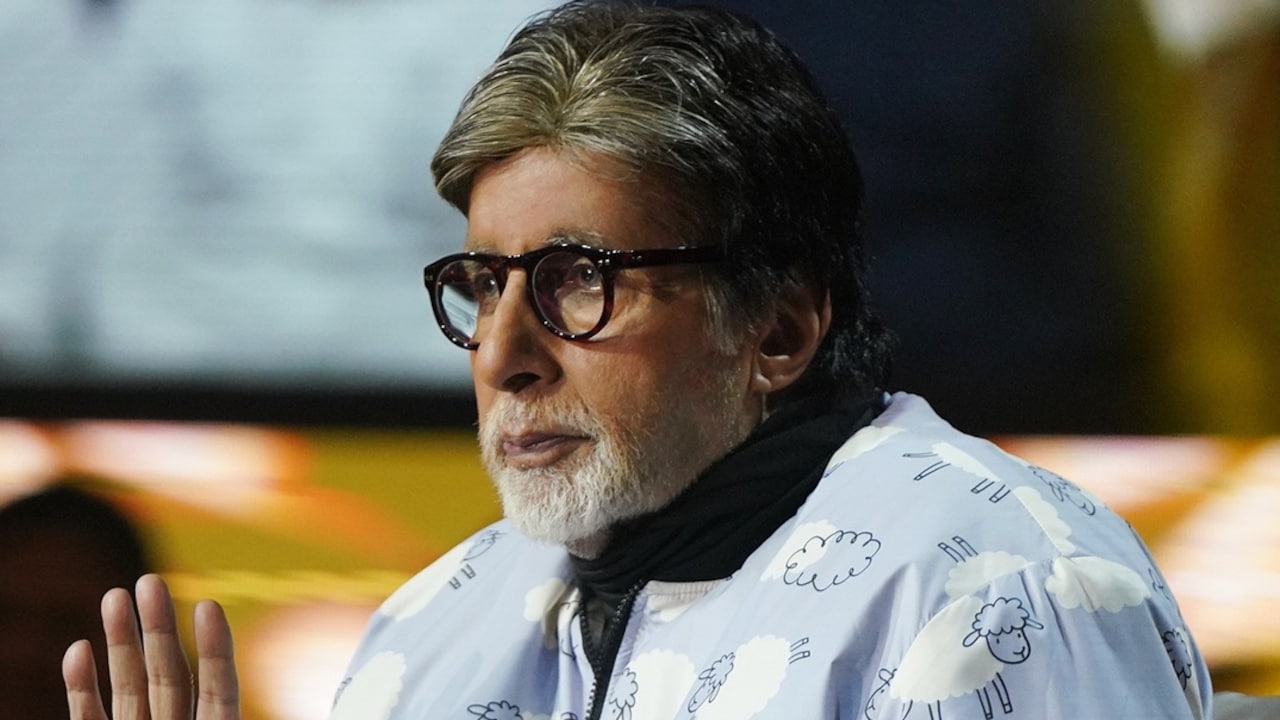
Amitabh Bachchan, born on 11 October 1942, is one of the most celebrated actors in Indian cinema. Born as Amitabh Srivastava in Allahabad, now known as Prayagraj, he has built an extraordinary career as an actor, producer, playback singer, and television presenter. With more than 200 films to his credit, Bachchan has earned a lasting place in Hindi cinema through his powerful performances, distinctive voice, and remarkable screen presence.
Popularly known as the “Angry Young Man,” “Shahenshah of Bollywood,” and “Big B,” Bachchan became a defining figure in Indian cinema during the 1970s and 1980s. His contribution to the industry has earned him numerous national and international honours, including National Film Awards, Filmfare Awards, and some of India’s highest civilian and cinematic recognitions.
Early Life and Education
Amitabh Bachchan was born in Allahabad to renowned Hindi poet Harivansh Rai Bachchan and Teji Bachchan. He completed his schooling at Sherwood College in Nainital before pursuing higher education at Kirori Mal College, University of Delhi.
His early exposure to literature and the arts contributed to his interest in performance and storytelling. Before becoming a leading actor, Bachchan explored opportunities in the entertainment industry and began his film journey with a voice narration role.
Entry into Cinema and Early Career
Amitabh Bachchan began his association with films in 1969 as a narrator in Mrinal Sen’s Bhuvan Shome. His early acting work included Saat Hindustani (1969), which marked his acting debut in a feature film. He gained wider recognition with films such as Anand (1971), in which his performance earned critical appreciation, and Namak Haraam (1973).
His career reached a turning point with Zanjeer (1973). The film introduced audiences to a different kind of Hindi film hero, characterized by intensity, anger, and a strong sense of justice. This role helped establish Bachchan as the “Angry Young Man” of Indian cinema and transformed his professional trajectory.
Rise to Stardom in the 1970s and 1980s
During the 1970s and 1980s, Amitabh Bachchan delivered a series of memorable performances that helped shape mainstream Hindi cinema. His films combined action, drama, emotion, and memorable dialogues, attracting audiences across generations.
Some of his most celebrated films from this period include Deewaar (1975), Sholay (1975), Kabhi Kabhie (1976), Amar Akbar Anthony (1977), Don (1978), Muqaddar Ka Sikandar (1978), Trishul (1978), Kaala Patthar (1979), Dostana (1980), Naseeb (1981), Lawaaris (1981), Namak Halaal (1982), Coolie (1983), Sharaabi (1984), and Mard (1985).
His performances in films such as Chupke Chupke, Mili, Silsila, Shakti, and Shahenshah also demonstrated his ability to explore a variety of characters and genres. His commanding screen presence, dialogue delivery, and versatility helped him become one of the most influential stars of his era.
His immense popularity during this period led international filmmakers and publications to recognize his impact on Indian cinema. His screen persona became closely associated with stories about justice, social inequality, personal struggle, and resilience.
Career Revival and Success in the 2000s
After a relatively quieter period in the 1990s, Amitabh Bachchan experienced a major career resurgence with Mohabbatein (2000). His performance introduced him to a new generation of viewers and opened the door to a series of successful films in different roles.
He subsequently appeared in popular and critically acclaimed projects, including Kabhi Khushi Kabhie Gham, Aankhen, Baghban, Veer-Zaara, Khakee, Black, Sarkar, Kabhi Alvida Naa Kehna, Cheeni Kum, and Paa.
In the following years, Bachchan continued to demonstrate his versatility through films such as Piku (2015), Pink (2016), Badla (2019), Brahmastra: Part One – Shiva (2022), and Kalki 2898 AD (2024).
His role in Black received widespread appreciation for its emotional depth, while Pink attracted attention for addressing consent and women’s rights. Piku showcased his ability to combine humour and emotional storytelling through a distinctive character.
Bachchan also appeared in the Hollywood production The Great Gatsby (2013), directed by Baz Luhrmann, marking an international film appearance in his extensive career.
Television Career and Kaun Banega Crorepati
Beyond cinema, Amitabh Bachchan has become one of India’s most recognizable television personalities. He is widely associated with Kaun Banega Crorepati, the Indian adaptation of the international quiz show Who Wants to Be a Millionaire?
His engaging presentation style, distinctive voice, and interactions with contestants have helped the programme maintain a strong connection with viewers. His television career has expanded his reach beyond film audiences and introduced him to multiple generations.
In addition to television hosting, Bachchan has worked as a playback singer, film producer, and brand ambassador for numerous companies.
Awards and Honours
Amitabh Bachchan has received extensive recognition for his contribution to Indian cinema. His honours include multiple National Film Awards and Filmfare Awards, reflecting his long-standing achievements as a performer.
Some of his most significant recognitions include:
National Film Awards for his performances in acclaimed films.
Filmfare Awards across acting and other categories.
Padma Shri, awarded by the Government of India in 1984.
Padma Bhushan, awarded in 2001.
Padma Vibhushan, awarded in 2015.
Dadasaheb Phalke Award, India’s highest honour in cinema, presented to him in 2018.
Officer of the Legion of Honour, awarded by the Government of France in 2007.
His awards and honours reflect his influence on Indian cinema and his continued relevance across generations.
Social Contributions and Global Popularity
Apart from his entertainment career, Amitabh Bachchan has participated in humanitarian initiatives and public awareness campaigns. He has also served as a brand ambassador for various causes and organizations.
His popularity extends well beyond India, with audiences across the United Kingdom, North America, the Middle East, Africa, the Caribbean, and other regions. His films, distinctive acting style, and television appearances have contributed to his international recognition, particularly among the Indian diaspora.
Through decades of work, Bachchan has maintained a strong presence in popular culture and remains an influential figure in the Indian entertainment industry.
Amitabh Bachchan’s Legacy in Indian Cinema
Amitabh Bachchan’s career represents one of the most enduring journeys in Hindi cinema. From his early performances in Anand and Zanjeer to iconic films such as Sholay, Deewaar, and Don, and later acclaimed projects including Black, Piku, and Pink, he has continually demonstrated his ability to adapt to changing cinematic trends.
His distinctive voice, powerful performances, and ability to portray complex characters have made him a landmark figure in Indian entertainment. As an actor, producer, television presenter, and cultural icon, Bachchan continues to influence filmmakers, performers, and audiences across generations.
His legacy is defined not only by his extensive filmography and awards but also by his lasting contribution to the evolution and international recognition of Indian cinema.